


What Age Should Toddlers Start Playgrounds?
- Jul 15
- 5 min read
A toddler who has just learned to walk may be ready to explore a playground, but that does not mean every slide, climber, or busy play space is the right fit yet. When parents ask what age should toddlers start playgrounds, the most helpful answer is not a single birthday. It is a mix of your child’s mobility, confidence, supervision needs, and the design of the play environment.
For many families, the playground becomes a favorite part of the week: a place to burn energy, practice new skills, meet other children, and make memories together. Starting with age-appropriate spaces and a little patience helps make that experience feel exciting for your toddler and reassuring for you.
What age should toddlers start playgrounds?
Many toddlers can begin enjoying simple playground experiences around 12 to 18 months, once they are walking steadily or cruising confidently with support. At this stage, playground time is less about tackling a big slide alone and more about touching new textures, walking across a soft surface, holding onto a low rail, and watching other children play.
Toddlers between 18 months and 2 years often become more interested in short slides, low steps, play panels, pretend-play areas, and open room to move. By ages 2 to 3, many children are ready for more active challenges, such as gentle climbing structures, tunnels, and toddler-sized obstacle features, as long as an adult stays close.
Age labels are useful, but they are only a starting point. A cautious 2-year-old may prefer side-by-side play and a low slide, while an adventurous 18-month-old may eagerly climb anything within reach. The goal is not to push your child toward the biggest attraction. It is to offer manageable challenges that build confidence safely.
Readiness matters more than the number
Before heading to a playground, consider how your toddler moves and responds in new places. A child does not need perfect balance or advanced climbing skills to start playing, but a few signs can show they are ready for a positive experience.
Your toddler may be ready to explore if they can walk with reasonable stability, sit independently, hold an adult’s hand while stepping up or down, and show curiosity about their surroundings. It also helps when they can respond to simple directions such as “wait,” “hold on,” or “come back.” These skills are still developing, of course, so close supervision remains essential.
Emotional readiness counts too. Some children run into a new play area with a huge smile. Others need five or ten minutes beside a trusted caregiver before they feel comfortable joining in. Let your child set the pace. Watching other children, trying one activity, then taking a break is still meaningful play.
If your toddler was born prematurely, has a medical condition, or is working through a developmental concern, ask their pediatrician or therapist for guidance tailored to them. Play is valuable for every child, and the right environment can often be adapted to meet different needs.
Choose a playground built for toddlers
The best first playground is not necessarily the largest one. It is one with clear age-appropriate features, soft flooring, manageable climbing heights, and enough visibility for caregivers to stay engaged.
Look for a designated toddler zone whenever possible. These areas typically offer lower platforms, smaller slides, activity walls, soft play pieces, and space to crawl or walk without older children rushing through. Separation from bigger-kid equipment can reduce collisions and give little ones room to learn at their own speed.
Indoor playgrounds can be especially helpful for toddlers because they provide weather-proof family fun and a more controlled setting. In Southern California, a comfortable indoor play space can be a welcome option during hot afternoons, rainy days, or weeks when your family simply needs a change of scenery. A clean facility with an open floor plan also makes it easier to keep your child in view while they explore.
At iPlayology, families can find toddler-friendly play alongside imaginative stations and active attractions designed to keep growing children engaged. For a first visit, starting in the gentler areas lets your toddler warm up before deciding whether they are ready for more movement and adventure.
How to make the first playground visit feel safe
Your presence is your toddler’s best safety tool. Stay close enough to offer a hand on steps, help them turn around safely at the top of a slide, and step in if play becomes too crowded. For new walkers, that often means being within arm’s reach rather than watching from across the room.
A few simple habits make a big difference:
Start with one or two low-risk activities instead of trying the whole playground at once.
Dress your child in comfortable clothes that allow easy movement, with secure socks or shoes based on the facility’s rules.
Check that equipment is dry, clean, stable, and free of broken parts or sharp edges.
Encourage feet-first sliding and remind your toddler to wait until the landing area is clear.
Take a snack, water, bathroom, or quiet-time break before your child becomes overly tired.
The last point matters more than many parents expect. Toddlers are still learning how to manage big feelings. A child who suddenly refuses to share, cries over a turn, or melts down after 45 minutes of play is not “bad at playgrounds.” They may simply be hungry, overstimulated, or ready to rest. Leaving while the outing is still mostly positive can make the next visit easier.
Supervision changes as toddlers grow
A 1-year-old and a 3-year-old may both be called toddlers, but their playground needs can look very different. Younger toddlers need hands-on help with stairs, climbing, balance, and navigating around other children. They may also put objects in their mouths or wander quickly toward an interesting new area.
Older toddlers often want more independence. Giving them small choices can support that growing confidence: “Would you like to go through the tunnel or down the little slide?” You can step back slightly while staying attentive, especially in a well-designed, easy-to-see play space. Independence is not the same as unsupervised play. It means allowing your child to try, repeat, and problem-solve while you remain available.
Be especially aware when toddlers and older children share equipment. Bigger kids are usually not trying to be unsafe, but their speed and size can be overwhelming for little ones. A toddler-only section, quieter play time, or a visit during less busy hours can create a calmer first experience.
Playgrounds support more than energy release
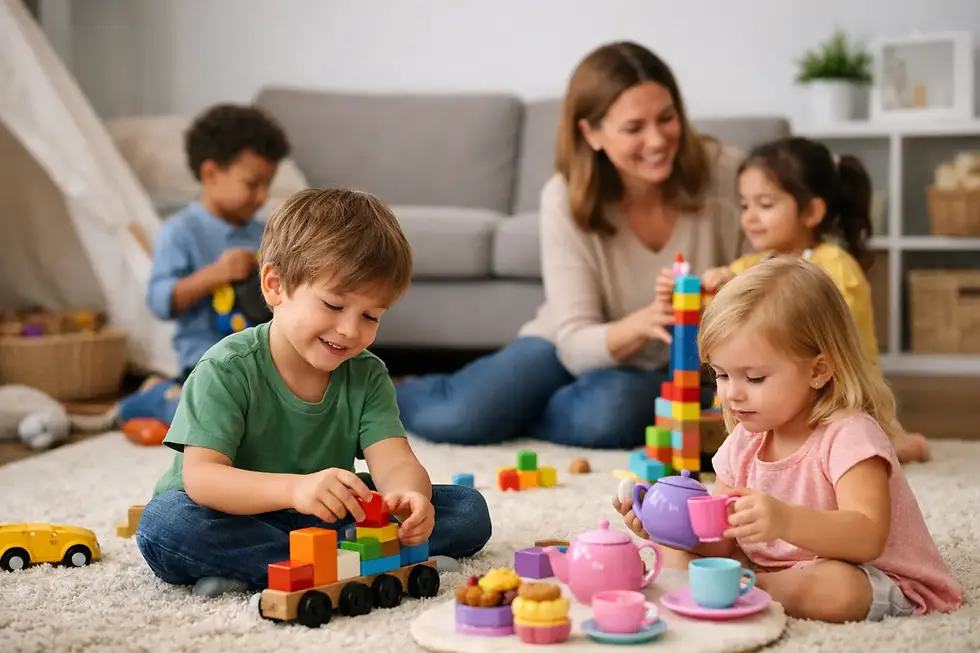
A good play session is not just a way to fill an afternoon. Climbing a few low steps strengthens leg muscles and coordination. Crawling through a tunnel supports body awareness. Carrying pretend food to a play kitchen, taking turns with another child, or offering a stuffed animal a “cupcake” builds imagination and early social skills.
Toddlers also learn through repetition. They may climb the same foam steps six times, slide down the same little slide, and proudly look back at you after every turn. That repetition is practice. It helps them understand cause and effect, develop balance, and feel capable in their own bodies.
There is a trade-off, though: more activity can also mean more stimulation. If your child seems overwhelmed by loud sounds, crowds, or fast-moving play, choose a smaller area, arrive earlier, or take regular resets in a quieter spot. The right visit does not have to be long or packed with activities.
Give your toddler time to grow into play
Some toddlers love playgrounds from their first visit. Others need several short, gentle introductions before they feel ready to climb, slide, or join another child in pretend play. Both responses are completely normal.
Offer encouragement without pressure. A warm “I’m right here when you’re ready” can do more than repeated requests to try the big slide. When toddlers feel safe, seen, and free to explore at their own pace, a playground can become a magical place for movement, imagination, and the little victories families remember.


Comments